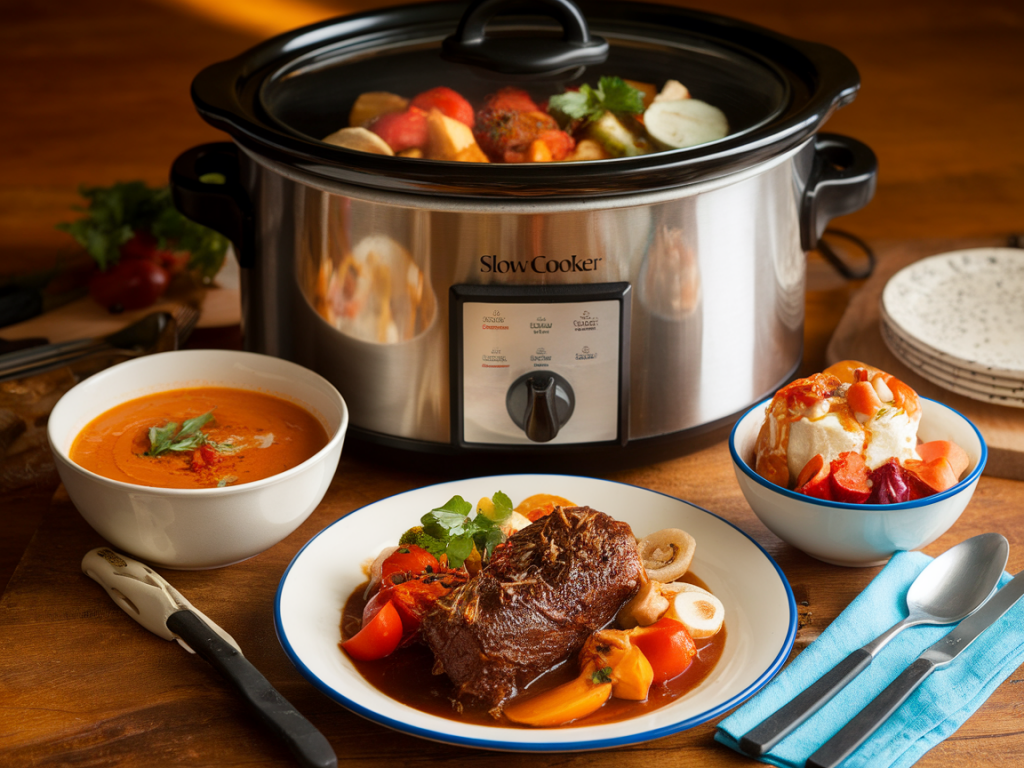
I love the idea of a tasting night: small plates, a relaxed vibe, and the chance to savour a few different flavours without spending all evening in the kitchen. Recently I realised you don't need a professional pantry or expensive ingredients to pull one off — just a good slow cooker, a few clever supermarket finds, and some simple plating tricks. I host this kind of three-course tasting night when I want something low-stress but special. Below I’ll walk you through a menu, a shopping list, a timeline, and plating ideas so you can do the same.
Why a slow cooker makes hosting easier
The slow cooker is my secret weapon. It lets me create deeply flavoured components with minimal hands-on time, freeing me up to set the table, make a quick side, or chat with guests. Think braised meats, infused broths, or a silky bean purée — all of which taste like you spent hours fussing but were actually almost unattended.
For this plan I used a 6–7 litre slow cooker (I have a basic Crock-Pot that I love), but a smaller or larger one will work — you’ll just adjust quantities. I also find that supermarket ready-prepped items (pre-chopped veg, good-quality tinned tomatoes, rotisserie chicken, jars of good olives) help keep things simple without sacrificing taste.
Menu — three small courses from supermarket finds
Here’s a balanced tasting menu that’s cosy, season-flexible, and mostly made from supermarket staples. Each course has a slow-cooker element or a quick assembly step.
Shopping list (supermarket-friendly)
Most ingredients are available in any large supermarket (Tesco, Sainsbury’s, Waitrose, Lidl/ALDI etc.). Where useful, I note brand or product types I like.
Prep and timing — a simple table to follow
| Time before arrival | Task |
|---|---|
| 6–8 hours | Start slow-cooker pork shoulder on low (or roast aubergine prepped with miso glaze). |
| 2 hours | Make quick apple compote and oat crumb; cool. Make bean purée (can be reheated). |
| 45 minutes | Parboil and roast baby potatoes, make quick-pickled shallots. |
| 15–20 minutes | Finish bean purée on the hob or quickly warm in the slow cooker; crisp or char flatbreads; assemble dessert glasses. |
Step-by-step: how I cook each course
Starter — Smoky cannellini bean purée with charred flatbread
I drain and rinse two tins of cannellini beans, then blitz them in a blender with a generous glug of olive oil, a good squeeze of lemon, smoked paprika, salt, and a splash of the pickling liquid from the shallots to add brightness. If the texture is too thick, I stir in warm water or a little vegetable stock until it's creamy. I reheat it gently in the slow cooker on warm when guests arrive, which keeps it silky without overcooking.
To serve, I heat a griddle pan and char flatbreads a few seconds each side — a supermarket naan or flatbread crisps up beautifully and looks more rustic if it has a few char marks. Spoon a few tablespoons of purée on each tasting spoon or small plate, tear the flatbread into strips, and top with quick-pickled shallots and a drizzle of extra virgin olive oil. A scattering of chopped parsley or chilli flakes adds colour.
Main — Slow-cooked soy-and-honey pork shoulder (or aubergine)
I keep this simple: brown the pork shoulder in a hot frying pan (optional), then place it in the slow cooker with soy sauce, honey, smashed garlic, grated ginger, a splash of orange juice if I have it, and a couple of bay leaves. Cook on low for 6–8 hours until it melts apart. Supermarkets sometimes sell "slow-cook" cuts labelled for braising — they’re perfect.
For a vegetarian main I halve aubergines, score them, brush with a mixture of miso, honey, soy and sesame oil, then roast 40–50 minutes until soft. To serve, I pull the pork into tasting portions, toss it briefly in the reduced sauce (I thicken the juices on the hob with a little cornflour slurry), and place a small mound on each plate with a couple of roasted baby potatoes and a tiny herb salad dressed with lemon and olive oil.
Dessert — Warm apple compote with mascarpone and oat crumb
Apples are peeled, cored and chopped, then slowly cooked down with a little butter, sugar, lemon and cinnamon until they’re jammy. I make a quick oat crumb by combining oats, flour, butter and brown sugar, then toasting it in the oven until golden. Serve a spoonful of warm compote in a small bowl, a dollop of mascarpone (or vanilla ice cream), and a sprinkling of the crumb. It’s homey, comforting and looks like dessert without taking ages.
Easy plating tricks that make supermarket food feel special
Plating doesn't need to be complicated — small gestures make a big visual difference.
Drinks and pairing ideas
I usually keep wine simple. For this menu I like a lightly chilled unoaked Chardonnay or a dry Riesling — both have enough acidity to cut through the richness of the pork and mascarpone. A fruity rosé works well too. If you prefer non-alcoholic options, sparkling water with a twist of lemon and a sprig of rosemary feels celebratory.
Dietary swaps and shortcuts
Want this to be vegetarian, vegan, gluten-free, or even quicker?
Hosting a three-course tasting night from supermarket finds is, to me, about making small, considered choices that add up to a lovely evening. The slow cooker handles the heavy lifting, and a few smart supermarket buys, plus some simple plating, turn everyday ingredients into a memorable meal. If you try it, I’d love to hear which supermarket shortcuts became your favourites — and whether you added your own twist to the recipes.