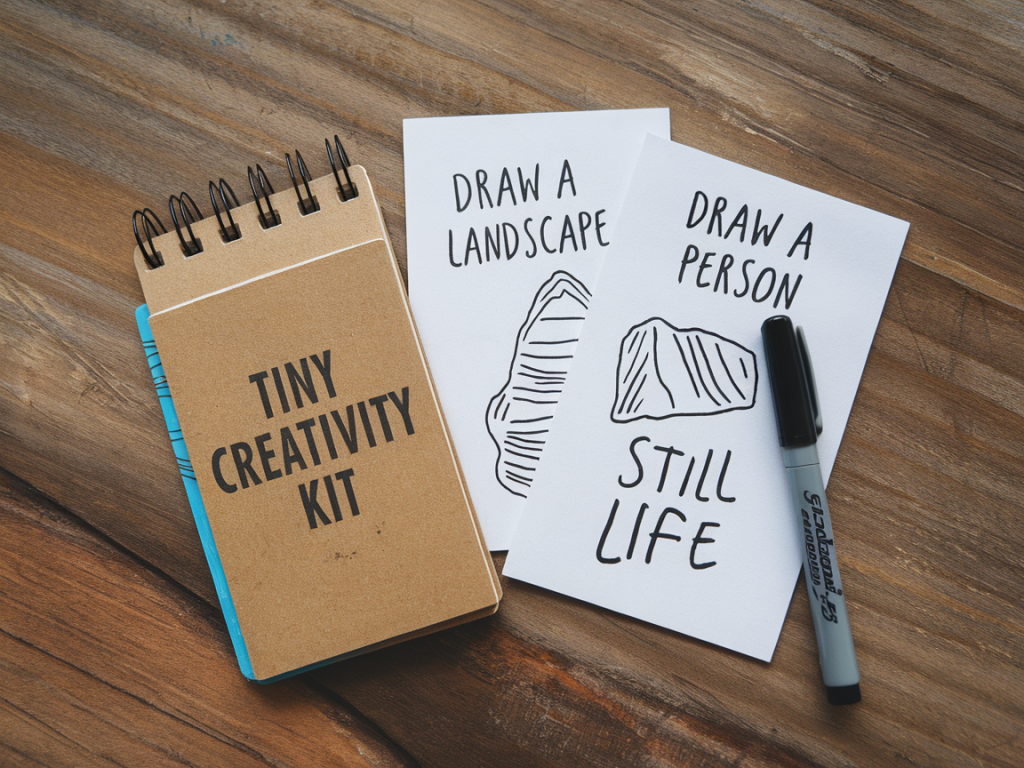
I carry a tiny creativity kit almost everywhere now. It started as a small experiment—could I capture a thought, a colour, a quick idea before it slipped away?—and it turned into a habit that makes ordinary moments feel slightly more curious. The trick wasn’t to buy the fanciest supplies; it was to make something delightfully minimal that I’d actually remember to bring with me. Here’s how I build a pocket sketchbook kit that fits in a back pocket or the smallest crossbody, with a reusable pen and three prompts that keep me drawing, noticing, and staying playfully present.
Why a tiny kit works
Big art bags are beautiful, but they can be a barrier. A tiny kit removes that friction. It’s light, fast, and forgiving. I don’t need a table or good weather; I just need a minute. A small ritual—take out the book, uncapped pen, pick a prompt—turns a spare moment into a creative one. The goal isn’t a masterpiece. It’s curiosity, practice, and a tiny snapshot of how my mind meets the world that day.
What I include (and why)
Keep it small, useful, and joyful. My kit has three essentials:
- Pocket sketchbook — thin, tactile, and just big enough for a page or two of doodles.
- Reusable pen — a reliable line, no disposable clutter.
- Three prompts — ready-made invitations to draw or write when I’m stuck.
Here’s how I choose each piece so the kit survives real life, not just ideal days.
Choosing a pocket sketchbook
For me, a pocket sketchbook is about proportions and paper. I like the size to be roughly the dimensions of a passport or a slim Moleskine Pocket (around 3.5 x 5.5 inches). That shape slips into many pockets and fits neatly inside a small bag. I prefer paper that handles pen ink without bleeding too much—think 120–140 gsm—but it doesn’t have to be fancy.
If you like texture, pick a slightly toothy paper (better for graphite and brush pens). If you’ll mostly use a fineliner, a smoother 120 gsm will work. I’ve used Field Notes, Moleskine Cahiers, and cheaper handmade notebooks; the key is that the book feels inviting to open. A softcover with a stitched spine opens flat enough for quick sketches and feels pleasantly worn after a few weeks.
Picking a reusable pen
A reusable pen makes the kit feel special and eliminates the disappointment of dried-out freebies. My favourite is the LAMY Safari rollerball for its reliable ink flow and comfortable grip. For a slimmer option that still lasts, Uni-ball Jetstream pens are excellent. If you like brush-like marks, the Tombow Fudenosuke brush pen is small and expressive.
What matters is consistency. Choose one pen you like so your sketches and notes feel visually coherent. I also carry a small metal pen clip or a tiny elastic band to keep the pen attached to the sketchbook if I’m walking around a market or traveling light.
Three prompts that always work
Prompts are the engine. I keep three printed or written on a small card inside the front cover. They’re deliberately open-ended and varied so you can pick based on time and mood. Here are the ones I use:
- 5-minute portrait: Draw someone nearby or a self-portrait in a reflection. Keep it quick—focus on gesture, not detail.
- Colour trio: Pick three colours you see around you and create a small composition or pattern inspired by them.
- Object story: Choose an object within arm’s reach and write three lines or sketch three frames that tell its ‘life’—where it came from, a small memory, and how it feels now.
These prompts are flexible. I use the portrait prompt at coffee shops, the colour trio on transit or in nature, and the object story when I’m at home or stuck in a waiting room. Having only three keeps decisions simple. If I want a new prompt, I’ll swap one out every month—freshness without fuss.
Small extras that make a difference
There are a few lightweight additions I’ve learned to appreciate:
- Elastic band: secures the book and pen together and keeps loose scraps inside.
- Mini washi tape: to stick a business card or a leaf into the book without glue.
- A tiny ruler or folding palette knife: for precise edges or scraping graphite (optional).
These extras live in a tiny zip pouch with the sketchbook when I carry the kit in a bag. If I’m slipping the kit into a jacket pocket, I keep only the book and pen—less to forget.
How I use the kit in daily life
I’ve mapped the kit to my rhythms. On weekday mornings I tuck it in my jacket for the commute. If I have a 10-minute gap, I pick a prompt. On weekends I let the sketchbook be messier—collage, longer drawings, recipes, or a quick travel note. The habit I guard most: always finishing a page. Even a single quick doodle counts. It closes the loop and makes the next use feel less intimidating.
Here are moments when the kit shines:
- Waiting for a friend at a cafe — 5-minute portrait or object story.
- On a slow bus — colour trio inspired by adverts and upholstery.
- In a park — sketch a tree with a single line and add a short memory.
Care and maintenance
Every month I flip through my sketchbook and add a date or short note to each page. It’s satisfying—and it turns the book into a tiny diary. If a pen runs low, I replace the refill rather than the pen. The environmental and practical benefit is that a single small investment keeps the kit usable for years.
Quick packing checklist
| Pocket sketchbook | Passport-sized, 3.5 x 5.5 in, 120–140 gsm |
| Reusable pen | LAMY Safari, Uni Jetstream, or Tombow Fudenosuke |
| Prompt card | Three prompts written on a small card inside the cover |
| Optional extras | Elastic band, mini washi, tiny zip pouch |
This little kit has changed how I see waiting, walking, and making time for small experiments. The point isn’t to create a body of ‘good’ work—it’s to train curiosity and attention, one pocket-sized page at a time. If you make one, start with a pen you love and three prompts you’ll still want to use in a month. And then forget about being perfect—carry it, use it, and see what shows up.