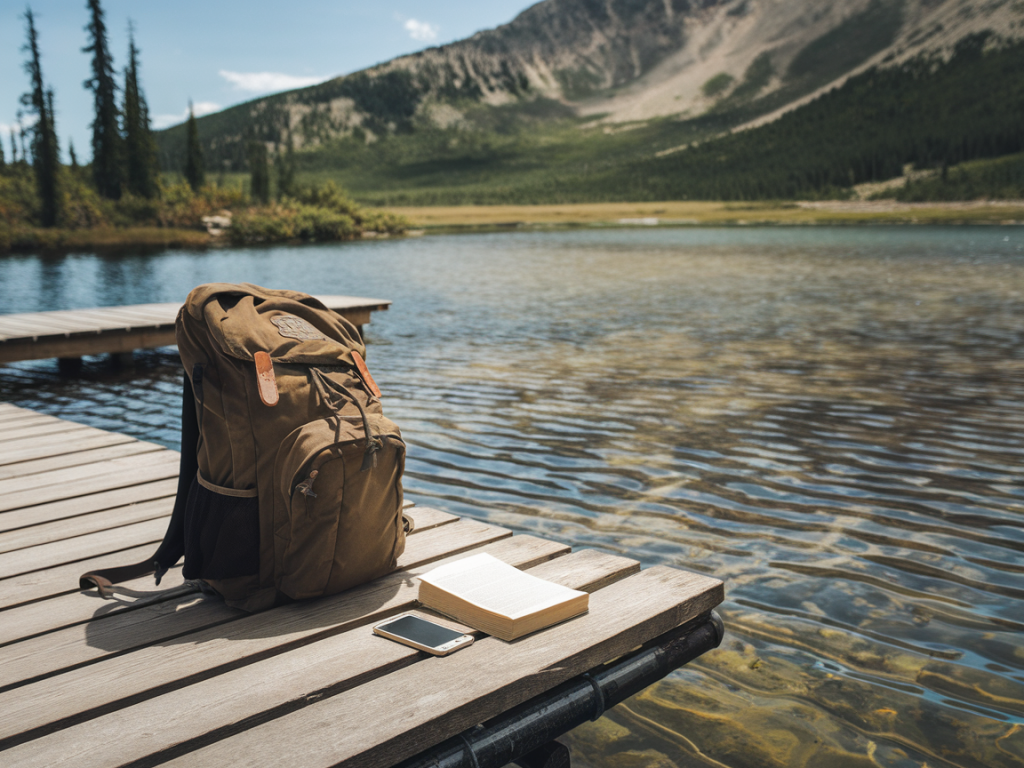
I love a weekend that feels like a tiny reset: the kind that fits in a single backpack, lets a paperback do most of the thinking for me, and uses my phone in a way that supports calm rather than steals it. Planning a restorative solo trip doesn’t need a lot of logistics—just a few clear choices that make space for slow mornings, curious wandering and gentle routines that ground you when you’re away from home.
Choose a destination that invites ease
Restorative doesn’t mean remote. For a single weekend I usually pick somewhere within 2–3 hours of travel: a coastal town with a harbour walk, a small seaside village, a market town with a well-rated bakery, or a quiet spot on the edge of a national park. Proximity matters because long travel eats into the time you have to slow down. I look for:
- Simple transport options (direct train, a short drive, or a coach with comfy seats)
- One base to return to each day — a small B&B, a studio or a tidy guesthouse
- Easy access to food and a short loop for walking so I can swap between walking and sitting without planning
When I’m deciding between two places, I ask myself: Which one gives me time to read a whole chapter before dinner?
Pack light: the backpack formula
I plan for three kinds of weather and one outfit for each day. My backpack packing rule: if it’s bulky, it has to be justified. Here’s the condensed list I bring for a restorative solo weekend:
| Category | Essentials |
|---|---|
| Clothing | 2 tops, 1 sweater, 1 pair of trousers/jeans, 1 set of sleepwear, lightweight rain jacket, socks & underwear |
| Shoes | Comfortable walking shoes + optional sandals |
| Toiletries | Small wash bag (toothbrush, multi-use cleanser, moisturiser, SPF, minimal makeup) |
| Extras | Water bottle, sunglasses, compact umbrella, reusable tote |
| Tech & Paper | Phone + charger, headphones, paperback book (or lightweight paperback + thin journal) |
I often choose a soft-sided 20–25L backpack that’ll squeeze under a train seat. The paperback is non-negotiable. It’s tactile, it forces me to slow my reading, and it’s a small, beautiful object to carry. If you prefer an e-reader, bring a charger and pick a single book to avoid decision fatigue.
Design a simple phone routine
Your phone can either be a lifeline or a distraction. For me, a few small rules keep it useful without letting it edge into every minute:
- Do Not Disturb: Turn on DND for the duration of the trip and allow only a few important contacts. I usually set my partner and one close friend as exceptions.
- Notifications audit: Before I leave, I disable notifications from social apps. Email checks are limited to once a day, if at all.
- Flight mode pockets: I create two pockets of time where my phone is truly offline—one in the morning while I read and drink coffee, and one in the evening after a walk.
- Essential apps only: Use maps, a transport app and maybe an offline playlist or podcast app. Remove temptation by hiding social apps on a folder out of sight.
- Phone rituals: Set three short alarms: wake, midday check, and evening wrap-up. The midday check is when I decide whether to reply to messages, and the evening wrap-up is when I clear my downloads and set the phone aside for the night.
These small habits protect the lightness of travel while keeping you reachable and safe.
Plan a flexible itinerary
My weekend itineraries are essentially "gentle scaffolding." I pick one small goal for each day—one walk, one place to sit and read, one meal at a recommended cafe—and leave the rest empty to be filled by curiosity. A recent weekend looked like this:
- Friday evening: arrive, walk the nearest pier, read a chapter, early sleep.
- Saturday morning: slow coffee at a local cafe, an hour-long walk along a coastal path, lunch from a market stall. Afternoon: park bench reading, optional museum visit. Evening: cookery class or small dinner out.
- Sunday: try a new breakfast spot, an easy circular walk, depart after a final coffee.
Keep transport times in mind. If you’re travelling by train, I build in a buffer so delays don’t thwart my plans. And I always leave one chunk of unscheduled time—this is often when the best little discoveries happen.
Eat simply, with attention
Food can be restful if you remove decision fatigue. I love choosing one “sit-down” meal and letting the rest be simple pleasures: a bakery croissant, a salad, a bowl of soup. If the place you’re visiting has a farmers’ market, I usually buy a small selection to nibble on in the afternoon—cheese, fruit, bread—then sit and read.
When I eat, I try to do it without scrolling. Eating without distraction not only helps digestion but deepens the sense of being away.
Slow activities that feel restorative
Think small and repeatable:
- Morning pages: ten minutes of free writing to clear your head.
- Two short walks: one to wake up, one to un-wind in the evening.
- One long reading session with your paperback—no agenda, just a chunk of time.
- A tiny creative prompt: sketch the view outside your window, jot a haiku, or photograph a single street corner.
I always carry a small Moleskine or cheap notebook for notes. Sometimes I end up with a page of favourite sentences from the book I’m reading, which is a lovely souvenir.
Safety and practical tips
Solo doesn’t mean isolated. I share my itinerary with someone I trust and check in when I arrive. I keep a digital copy of my ID and tickets, and I make sure my phone is charged before heading out on a long walk. If you’ll be in rural areas, download offline maps (Google Maps and Citymapper allow this). A small power bank has saved me more than once.
How I measure success
I don’t expect a dramatic revelation. Success is relational and small: I return feeling like my days stretched slower, my attention felt clearer, and I had at least one moment that surprised me—a view I hadn’t planned to notice, a friendly conversation with a barista, a paragraph in a book that stopped me. Those little accumulations are the point.
Above all, be kind to yourself. If your idea of restorative is museums and a fancy dinner, do that. If it’s naps and a long beach walk, do that instead. The constraints—backpack, paperback, a phone routine—are simply tools to create a softer, more intentional weekend. The rest is up to curiosity.