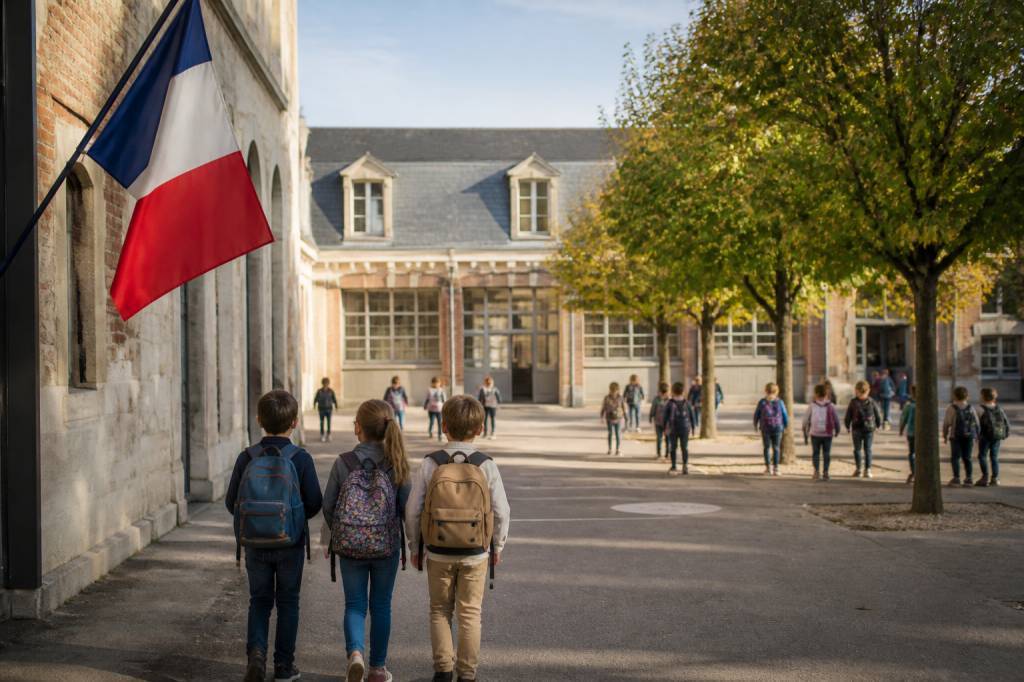
Understanding the French school system
The French school system is known for its clear structure, strong national framework, and emphasis on academic rigor. For families moving to France, students planning to study there, or readers simply curious about how education works in the country, it helps to understand the different stages, the age ranges, and the main expectations at each level. Unlike systems that vary widely from region to region, France relies on a centralized approach, which means most schools follow the same national curriculum and official academic guidelines.
Education in France is compulsory for children from the age of three to sixteen, although many students continue beyond that age into upper secondary education and higher studies. The system is divided into several stages: preschool, elementary school, middle school, and high school. Each stage has its own objectives, teaching methods, and assessment style. There is also a strong public education sector, but private schools exist as well, and they can follow either the national curriculum or a different educational model depending on the institution.
One of the most distinctive features of the French system is the value placed on general knowledge, written expression, and formal assessment. Students are often expected to develop strong reasoning skills, learn to write clearly, and demonstrate independence as they progress through the grades. Understanding how these expectations evolve from early childhood to the final years of school can help parents and students make informed choices.
Preschool and early learning
In France, preschool is called école maternelle. It usually welcomes children from age three to age five, and in some cases even younger children may attend if there is space. This stage is not simply childcare; it is considered the first step in formal education. The goal is to introduce children to a classroom environment, social interaction, basic routines, language development, and early learning through play, songs, stories, and guided activities.
Children in preschool are placed into three main levels: petite section, moyenne section, and grande section. In the petite section, the focus is on helping children adapt to school life and develop social skills. In the moyenne section, children begin to engage more actively with numbers, letters, shapes, and motor activities. The grande section prepares them for elementary school by reinforcing pre-reading and pre-writing abilities, as well as developing attention and classroom discipline.
Although the atmosphere is generally playful, French preschool is structured and teacher-led. Children are encouraged to listen, speak in complete sentences, follow instructions, and participate in group activities. This early exposure to school routines is one reason many children adapt well to the later academic stages.
Elementary school and the foundations of learning
Elementary school, or école élémentaire, begins at around age six and lasts for five years. This stage is essential because it lays the academic foundations in reading, writing, mathematics, science, history, geography, and civic education. Students are expected to build strong literacy and numeracy skills, and the workload gradually increases as they move through the grades.
The elementary cycle includes CP, CE1, CE2, CM1, and CM2. CP, short for cours préparatoire, is a major transition year where children begin formal reading and writing instruction. By CE1 and CE2, students are reading more fluently, learning basic grammar, and solving increasingly complex math problems. In CM1 and CM2, they deepen their understanding of language, arithmetic, problem-solving, and general knowledge topics.
Teachers in elementary school usually teach a class for most subjects, which helps create consistency and a strong relationship between teacher and students. Homework may be assigned, depending on the school and level, and parents are often expected to support reading practice and review lessons at home. Assessment is continuous, with teachers monitoring progress throughout the year rather than relying only on major exams.
French elementary education aims to give every child a solid base before entering secondary school. It is also a time when students learn to organize themselves, respect classroom rules, and work both independently and with others. These habits become increasingly important in later years.
Middle school and the first major transition
After elementary school, students move to middle school, called collège. This stage begins around age eleven and lasts four years, with students progressing through sixième, cinquième, quatrième, and troisième. Middle school marks a significant shift in academic expectations. Students now have different teachers for different subjects, a larger timetable, and more formal evaluation across multiple disciplines.
The curriculum broadens to include French language and literature, mathematics, history-geography, science, foreign languages, art, music, physical education, and technology. Students are also introduced to more structured study habits, note-taking, and classroom autonomy. The pace can feel faster than in elementary school, and the volume of material increases noticeably.
At this level, the French system places strong emphasis on literacy, analytical thinking, and discipline. In French class, students read literary texts, practice grammar, and write essays. In mathematics, they work on algebra, geometry, and problem-solving. History and geography lessons help students understand both France and the wider world. Foreign languages are mandatory, and many students begin a second language during collège.
There is also an important national exam at the end of collège called the Diplôme National du Brevet. While passing the exam is not the only criterion for moving on to high school, it is an important milestone. Students are assessed on coursework and final exam results, which encourages them to maintain steady performance throughout the year.
Parents and students often find collège to be the stage where academic habits become especially important. Organization, time management, and resilience all matter more as assignments become more demanding. Support from teachers and families can make this transition smoother.
High school and preparing for the future
High school in France is called lycée. It generally starts at age fifteen or sixteen and lasts three years: seconde, première, and terminale. This stage prepares students either for higher education or for entering the workforce through more vocational pathways. At lycée, students begin to specialize more than they did in previous years, although there is still a shared core curriculum.
In seconde, students continue with general subjects while exploring possible academic directions. By première and terminale, they choose a stream or combination of specialties that matches their interests and future plans. The French system has evolved over time, and the older rigid tracks have been replaced by a more flexible structure in many schools. Students can now select specialty subjects such as mathematics, economics, humanities, sciences, languages, or arts.
The final year of high school leads to the baccalauréat, often called the bac. This is the major national examination that marks the end of secondary education. The bac is important because it serves as the main gateway to university and other post-secondary institutions. Students prepare extensively for it, and the exam includes both continuous assessment and final written or oral tests depending on the subject and program.
For anyone comparing educational pathways, it may be useful to explore resources such as french school to better understand the lycée experience, especially if you are interested in schooling options connected to the French curriculum or French-language education. High school in France is academically demanding, but it also encourages students to think critically about their strengths and ambitions.
There are also vocational and technical lycées for students who want a more career-oriented education. These programs combine general subjects with practical training and can lead to diplomas that support employment or further study in specialized fields.
Types of schools in France
The French education landscape includes public schools, private schools, and international schools. Public schools are state-funded and follow the national curriculum. They are the most common option and are accessible to all children living in France. Private schools may receive government funding if they follow certain regulations, but some private institutions are fully independent and can organize their teaching more freely.
Many parents choose private schools for smaller class sizes, alternative teaching approaches, religious education, or bilingual programs. International schools can be especially attractive for expatriate families because they may offer instruction in English or other languages while still incorporating elements of the French system. These schools often serve students from many countries and can be helpful for families who move frequently.
Here are some key differences often considered by parents:
- Public schools generally follow the national curriculum and are widely available across the country.
- Private schools may offer more flexibility in teaching style, values, or language programs.
- International schools often support multilingual education and can ease transitions for foreign students.
- Some schools specialize in arts, sports, or vocational training.
Families usually consider location, language needs, academic goals, and school culture when choosing among these options. Because education is centralized in France, even public schools can feel quite consistent in terms of content and standards from one region to another.
Assessment, grading, and school rhythm
Assessment plays a central role in the French school system. Students are regularly evaluated through written work, oral participation, quizzes, projects, and exams. French grading often uses a scale out of 20, with 10/20 generally considered the passing mark. This system can feel unfamiliar to students from countries where letter grades or percentages are more common.
The school year usually begins in September and ends in early July, with breaks during the autumn, winter, spring, and summer. The rhythm of the year is structured and predictable, which helps families plan vacations and organize study time. Students typically attend school from Monday to Friday, though schedules vary by age and institution. Some students have classes on Wednesday morning, while others may have a half-day schedule depending on the region and school type.
Homework increases with age, especially in middle and high school. While younger children may have light reading or simple exercises, older students face more demanding written assignments, revision, and exam preparation. The French system values serious academic effort, and this often shapes the daily routine of students.
Oral expression is also important. Students are frequently asked to present work aloud, answer questions in class, or defend ideas during oral exams. This combination of written and oral evaluation reflects the broader educational philosophy of developing both clarity of thought and communication skills.
Support services and student life
Beyond academic subjects, French schools provide various support services and student life activities. School nurses, counselors, and administrative staff can help address health, emotional, or practical concerns. In some schools, students can access tutoring, language support, or specialized assistance if they have learning difficulties or disabilities.
Student life also includes clubs, sports, cultural activities, and school trips. Although extracurricular life may not be as extensive in some schools as in other countries, many institutions still offer opportunities for students to develop interests outside the classroom. Sports education is integrated into the school curriculum, and physical activity is considered an important part of a balanced education.
For international students or newly arrived families, adaptation can take time. Learning the expectations of the classroom, understanding school communication, and adjusting to the pace of instruction are all part of the process. Schools often support integration through language help or orientation meetings with parents.
Some practical points to keep in mind include:
- Schools usually communicate through report cards, meetings, and official notices.
- Parents are expected to stay informed about grades, schedules, and deadlines.
- Respect for teachers and school rules is highly valued.
- Students are encouraged to develop independence as they grow older.
The French school system can seem formal at first, but many families appreciate its coherence, high standards, and strong academic identity. Once students understand the structure and expectations, they often adapt well and benefit from the stability of the system.
Moving into higher education and future pathways
After the bac, students can continue to higher education in universities, grandes écoles, specialized institutes, or vocational programs. The French higher education system offers a wide range of choices depending on academic interests and career goals. University is a common route for students seeking broad academic study, while grandes écoles are selective institutions known for prestige and competitive entry requirements.
Some students choose shorter technical programs that lead more directly to employment. Others pursue professional degrees in areas such as engineering, business, design, health, or hospitality. The pathway chosen often depends on performance in lycée, long-term goals, and the results of the baccalauréat.
Because French schooling emphasizes strong general education, students are often well prepared for demanding university work. They tend to have experience with essay writing, critical analysis, oral presentations, and structured study methods. These skills are valuable whether students remain in France or continue their education abroad.
For families and students trying to understand this system for the first time, the main takeaway is that French education is highly structured, academically focused, and carefully sequenced from early childhood to the end of secondary school. Each stage is designed to build upon the previous one, creating a progression that prepares students for later study and adult life.
Practical tips for families and newcomers
If you are new to the French school system, it helps to prepare in advance. Learning the vocabulary of school levels, understanding how grades work, and knowing when the school year starts can make the transition easier. It is also useful to communicate regularly with teachers and school administration, especially if your child is adjusting to French-language instruction.
Families may also want to consider the following:
- Check whether the school is public, private, or international.
- Ask about language support if French is not spoken at home.
- Review the academic calendar and holiday periods early in the year.
- Learn how the school handles homework, exams, and parent meetings.
- Help children build a regular study routine from the beginning.
Above all, the French system rewards consistency. Students who keep up with lessons, stay organized, and seek help when needed usually adapt successfully. Whether a child starts in preschool or joins later in the system, understanding the structure can reduce stress and make the experience more positive.
For many families, the French school system becomes easier to navigate once the main stages and expectations are clear. With its national curriculum, distinct school levels, and strong emphasis on learning, it remains one of the most recognized education models in Europe.