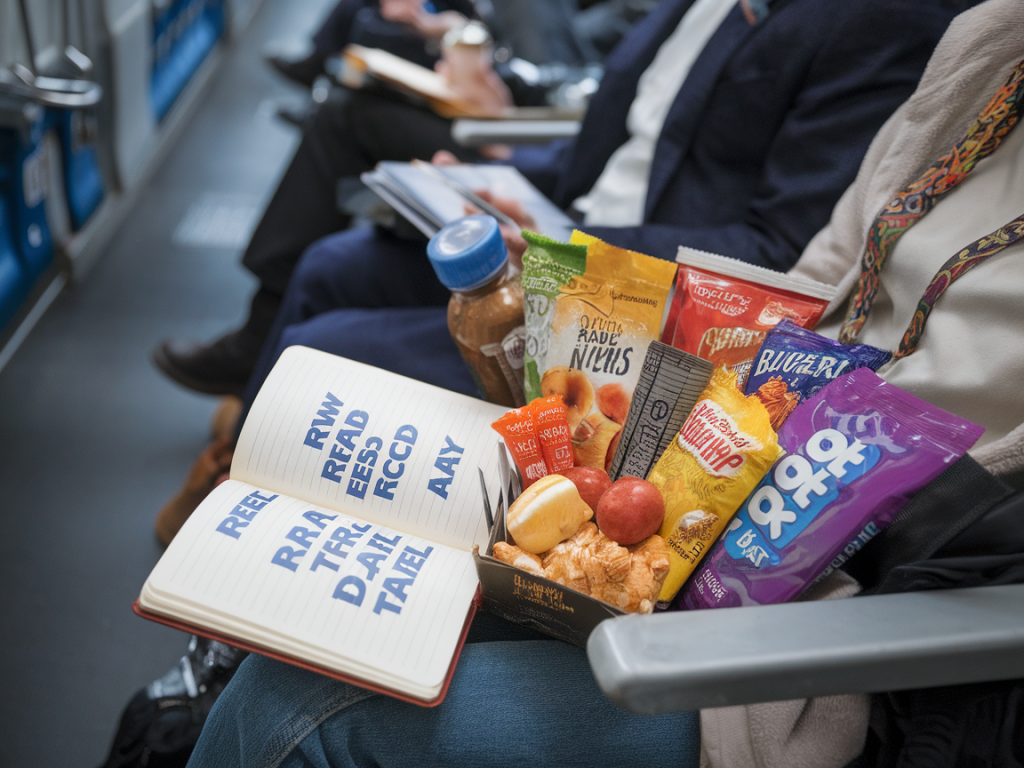
It always happens at the most inconvenient moment: an announcement over a tinny speaker, a sudden message from the airline, or a driver who never shows. A delayed travel day can feel like someone has taken a perfectly planned day and shaken it until all the nice things fall out. Over the years I’ve learned that the difference between a travel day that grinds and one that becomes a memory (albeit an unexpected one) is largely about having a small rescue kit: snacks that comfort and fuel, a practical mindset, and a handful of backup plans that actually work in the moment.
Below is my go-to, tested-in-real-life, step-by-step kit for rescuing a delayed travel day. I write from the trenches of airports, train stations and the side of motorways—when the best-laid plans unravel, I reach for this routine. It’s deliberately simple, tactile, and adjustable depending on how much time, space and patience you have.
First five minutes: stop and reset
When the delay is announced, the reflex is to panic-check every app, call someone, and sprint to another gate. I don’t say don’t do those things, but I do encourage a pause. Literally take five breaths and a quick inventory.
- Check the official source. Look at the airline or train operator’s app or the station boards for the official delay reason and estimated new time. That gives you a baseline.
- Note your needs. Do you need a charger? Refillable water? A quiet place? A loo? Jot one line in your head or phone: what would make you feel less stressed right now? That becomes your priority list.
- Decide whether to move. If the delay is more than an hour and you’ve got options (alternate routes, different transport), decide whether to explore them now or after you’ve handled basic needs like food and charge.
The snack kit: what I always carry
I have a small travel pouch that lives in my day bag. It’s not fussy—just things that feel a bit like home and that actually help when you’re stuck.
| Item | Why I bring it |
|---|---|
| Protein bar or nut butter sachet | Keeps energy steady and stops the hanger spiral. I like RXBAR or Seedlip snack bars for texture. |
| Plain crackers or rice cakes | Gentle on the stomach and pairs well with a cheese wedge or hummus from a station shop. |
| A wrapped treat | A little chocolate or biscuit feels like a reward and improves mood instantly. |
| Electrolyte sachet or a small bottle of coconut water | Delays mean irregular drinking. A pinch of electrolytes helps if you’re dehydrated. |
| Reusable cutlery & napkin | Small but useful if you buy food and need to eat hygienically on the go. |
If you’re flying and want to be ultra-minimal, a protein snack and a bottle of water are my top picks. For longer waits, add a soft cheese or a small container of hummus from the terminal and some crackers—this feels indulgent in a comforting way.
Mindset tools: choices that change the day
Delays aren’t just logistical—there’s an emotional component. Here are mental shifts I make to stop the day from becoming an ordeal.
- Reframe the time: Instead of “lost time,” think of it as “found time.” This is your chance for a chapter you wouldn’t otherwise get—read, sketch, plan, or sleep.
- Small wins matter: Set tiny achievable tasks—charge your phone to 60%, eat a proper snack, write a postcard. Each completed task reduces stress.
- Practice radical politeness: Smiling and being patient with staff often gets you clearer information and small favors. People are human at the front desk, and kindness goes a long way.
- Limit doomscrolling: Keep an eye on official updates, then put your phone away. I set a 20-minute check-in timer and fill the gap with something restorative.
Backup plans that actually work
Planning backups is less about having a dozen elaborate schemes and more about a few clear options you can actually activate without getting flustered.
- Alternative routes: Before travel day, I note one alternate route and one alternate carrier (train line, different airport connection). Don’t try to research in a panic—have them in notes on your phone.
- Accommodation trigger: Decide in advance how long you’ll wait before booking a hotel or moving to a new station. My rule: if delayed more than 4–6 hours overnight, book a room unless you want to rough it.
- Contact list: Keep one message template for family/work that explains the situation and the new ETA. Copy-pasting saves time and prevents repeated calls.
- Refund/transfer checklist: Know the refund or rebooking policy basics for your ticket provider. If you’re on an airline, have the app logged in so claims or rebooks are quicker.
Comfort hacks for long waits
When the delay stretches, comfort becomes a survival skill. These are small things that make a long wait tolerable.
- Use noise-cancelling headphones or earplugs for a calmer space; I use Bose or Sony in busy terminals.
- Stretch. Walk a lap, do calf raises, or find a quiet corner for five minutes of mindful breathing.
- Change into a fresh layer—light scarf, dry top, clean socks. It’s astonishing how much a small change of clothing helps.
- Find a comfy seat near a power outlet. If none are available, many coffee shops in terminals will be happy to let you sit if you purchase something (a win-win).
When you must change plans: who to call and what to say
When the delay forces a change—missed connection, hotel check-in, a tour—you need to communicate clearly and quickly.
- Prioritize: Who needs to know now? Host, transfer driver, employer. Tell others you’ve delayed and when you’ll update them.
- Short scripts: Have concise phrases ready: “Hi, I’m delayed due to [flight/train]. New ETA currently [time]. I’ll confirm by [time].” This reduces follow-up questions.
- Ask for help: Call the accommodation or tour provider and ask about flexible check-in or rescheduling options. Many are accommodating when asked politely.
Delays chip away at the fantasy of travel, but they also create a quieter, unexpected space. Over years of travel I’ve found that being prepared—snacks that soothe, a calm mindset, and clear, practical backups—turns those spaces into manageable, sometimes even oddly peaceful parts of the trip. Pack the kit, practice the habits, and give yourself the permission to slow down: a delayed day can still become a good story.