There’s something quietly joyful about gathering friends in your living room for a tasting night — no reservations, no rush, just a slow, curious way to spend an evening together. I host these evenings on a shoestring budget without compromising on the experience. Below I’ll share how I plan a memorable at-home tasting night using affordable wines and simple snacks, plus practical tips that make it feel special rather than stressful.
Set a clear theme (it makes shopping easier)
I always start with a theme. A theme keeps the tasting focused and helps guests compare and chat about specific things. Some themes I’ve used successfully:
Pick a theme that excites you and your group; it makes the whole evening feel curated.
How many wines and how much per person?
For a relaxed evening, I usually choose 4–6 wines. That’s enough variety to keep the conversation moving without overwhelming palates. Plan for about 60–90ml per tasting pour if you want to be generous, which means a standard 750ml bottle will serve roughly 8–12 tasting pours.
- 4 bottles for 6–8 people works well for a 2–3 hour evening.
- If you want people to enjoy a glass after the tasting, add one extra bottle or two.
Buying affordable wines that still impress
My rule is this: look for value regions and trusted supermarkets or online retailers. I often find gems at Sainsbury’s Taste the Difference range, Tesco Finest, Lidl’s Cuvée collections, or Majestic’s under-£10 picks. Online shops like Naked Wines and Laithwaites also feature good introductory offers.
Some reliable buys I’ve used:
Buy slightly different styles to keep the tasting interesting (lighter, fuller, dry, off-dry). If you’re unsure, ask a shop assistant for “good quality under £10” picks — they often point you to surprising favourites.
Snack pairing basics — keep it simple and seasonal
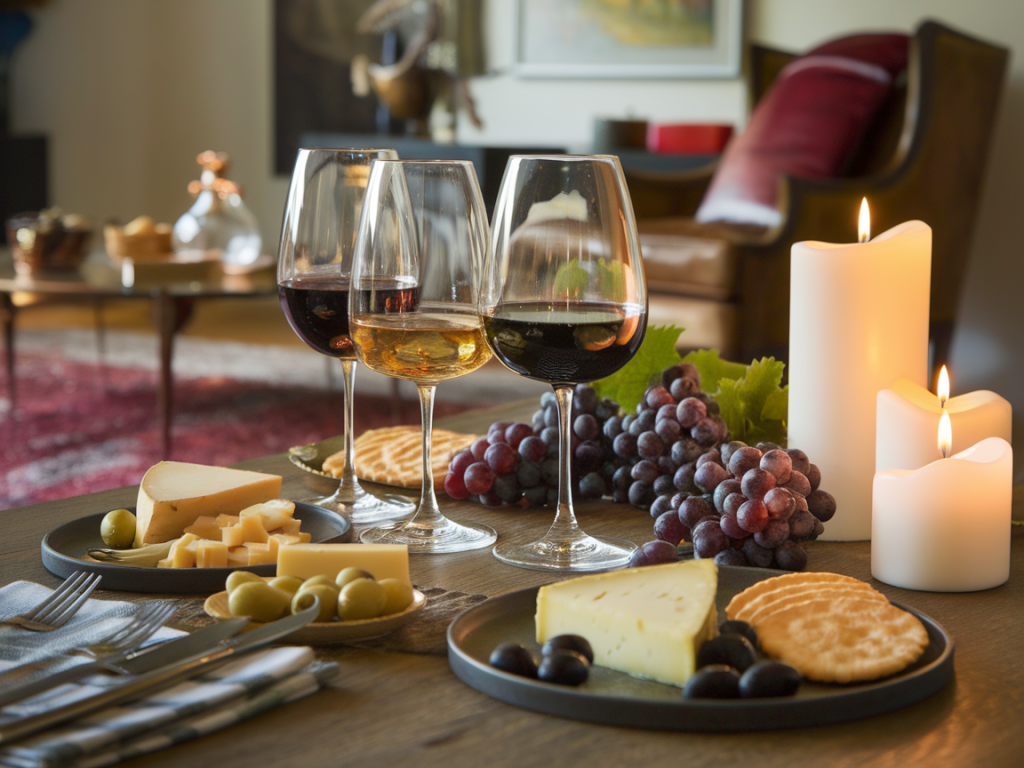
The idea is to complement, not overshadow, the wines. I like a mix of textures and flavours so guests can test contrasts: salty, creamy, acidic, crunchy. My go-to snack table looks like this:
- Three cheeses: a soft (camembert or brie), a hard (aged cheddar or Manchego), and a blue (or a milder sheep’s cheese if guests dislike blue)
- Cured meats: chorizo or salami — slice thin
- Accompaniments: olives, cornichons, honey or fig jam
- Crunchy breads: crackers, a baguette, and water biscuits
- Something fresh: seasonal fruit like grapes, apple slices, or pear
- Palate cleanser: plain water and plain crackers
Tip: buy cheese from a deli counter if possible — you’ll often get better value and small tasting pieces. I also like to include one unexpected item like roasted nuts or a dark chocolate square for richer reds.
Simple tasting order and setup
Pour white and sparkling wines first, then move to rosé and lighter reds, finishing with full-bodied reds and fortified wines. I arrange glasses in line, give each wine a number, and write short tasting cards with the wine’s name, region, and a couple of prompt questions (e.g., “What do you notice first?” “Would you pair this with food?”).
Essential setup items:
- Wine glasses (a basic white and red glass is fine — don’t stress about stemware)
- Water jugs and spittoons (a large bowl or empty jug works)
- Notepads and pens for guests who want to record favourites
- Small labels or sticky notes to number the bottles
How I lead the tasting (without being bossy)
I prefer a gentle structure: introduce the theme, explain the tasting order, and invite people to smell, sip, and share one word or observation. Keep it playful. Ask open questions like:
If someone’s new to wine, reassure them: there are no wrong answers. Encourage comparing two wines side-by-side — that’s where the surprises happen.
Fun extras that make it memorable
I like adding a small game or twist to the night. A few favourites:
Budget table: example shopping list
| Item | Estimated price (GBP) | Notes |
|---|---|---|
| 4 affordable bottles (varied) | £6–£10 each | Choose one white, one rosé, two reds or mix |
| Cheeses (3) | £8–£12 total | Buy from deli for better value |
| Cured meats & olives | £5–£8 | Small platters go a long way |
| Crackers & bread | £2–£4 | Mix textures |
| Mise en place (notepads, labels) | £0–£5 | Use what you have at home |
With careful choices and a little creativity you can host a tasting night that feels thoughtful and fun without breaking the bank. I’ve found the best evenings aren’t about the most expensive bottle on the table — they’re about conversation, surprise, and a few shared discoveries. Now pour that first glass and enjoy watching your friends taste, compare, and laugh together.