I love the idea of testing small changes with a timebox: two weeks feels short enough to commit to and long enough to learn something useful. Over the years I’ve run dozens of tiny experiments on myself — from trying a one-minute morning stretch to a week of writing by hand — and the approach I reach for most often is a two-week personal growth experiment built around tiny habits and a simple free habit tracker. Below I’ll walk you through how I design one, with concrete steps you can copy, a ready-to-use tracker you can paste into a note or print, and troubleshooting tips from things that actually failed for me (so you don’t repeat the same mistakes).
Why a two-week experiment?
Two weeks is long enough to get past the awkward first few days and notice patterns, but short enough to feel achievable. I find that committing to two weeks reduces perfectionism — it’s not forever — and keeps momentum high. Tiny habits are perfect for this kind of experiment because they require minimal willpower and are built to slot into existing routines.
How I choose the tiny habits
Start small. When I pick habits for a two-week test I follow three rules:
Here are examples I’ve used and enjoyed:
Designing the experiment — day-by-day structure
I write a simple plan before I start. Mine includes:
Example phrasing I write in my plan: "After I make my morning tea, I will write one sentence in my journal. I will mark it on my tracker and say 'Nice work' out loud."
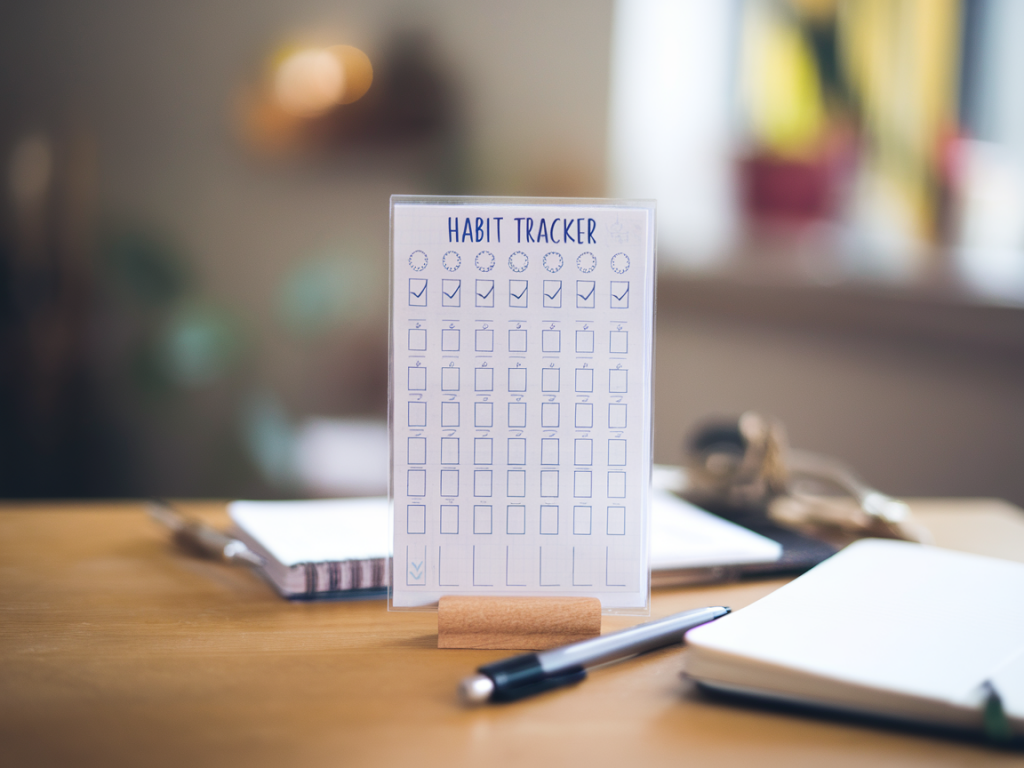
Free habit tracker (ready to use)
You can copy this simple HTML table into a note or paste it into a Google Doc / Notion page. Print it or use it digitally. I use a version in Google Sheets sometimes, and other times I print and stick it on the fridge.
| Habit | Day 1 | Day 2 | Day 3 | Day 4 | Day 5 | Day 6 | Day 7 | Day 8 | Day 9 | Day 10 | Day 11 | Day 12 | Day 13 | Day 14 | Notes |
|---|---|---|---|---|---|---|---|---|---|---|---|---|---|---|---|
| Morning: 1-sentence journal | |||||||||||||||
| Midday: 1 page reading | |||||||||||||||
| Evening: 90s breathing |
How I use this: I put a big "✓" or color a cell when I complete the habit. In the Notes column I jot quick observations like "felt rushed" or "did while waiting for kettle" which helps me see patterns.
Tools I use
You don’t need an app, but some tools make it easier:
Daily routine and micro-celebration
Micro-celebrations are a tiny but important part of habit creation. For me, they can be as small as a whispered "yay" or adding a sticker to the tracker. The idea is to create a tiny positive feedback loop. I also try to do habits right after the anchor action so the cue is reliable.
If I miss a day, I don’t beat myself up. I write a quick note in the tracker — "busy morning" — and move on. Often that single note helps me spot why a habit fails: maybe the anchor was too variable or the timing clashed with childcare or work.
Troubleshooting common problems
Here are problems I’ve run into and how I fixed them:
How to measure learning (not just success)
At the end of the two weeks I answer a few simple reflection prompts in my notes. These help me decide whether to continue, adjust, or stop a habit:
I also look at the tracker to see streaks and patterns. If I hit 10+ ticks out of 14, I consider keeping it and slowly expanding. If it’s under 7, I ask whether the habit’s value outweighed the friction — sometimes the right choice is to stop.
Next steps you can try today
Small experiments like this are a gentle, curious way to learn about yourself. They don’t need to be perfect — they just need to be noticed and measured. If you run one, I’d love to hear what you tried and what you learned; it’s one of my favourite parts of running experiments myself.