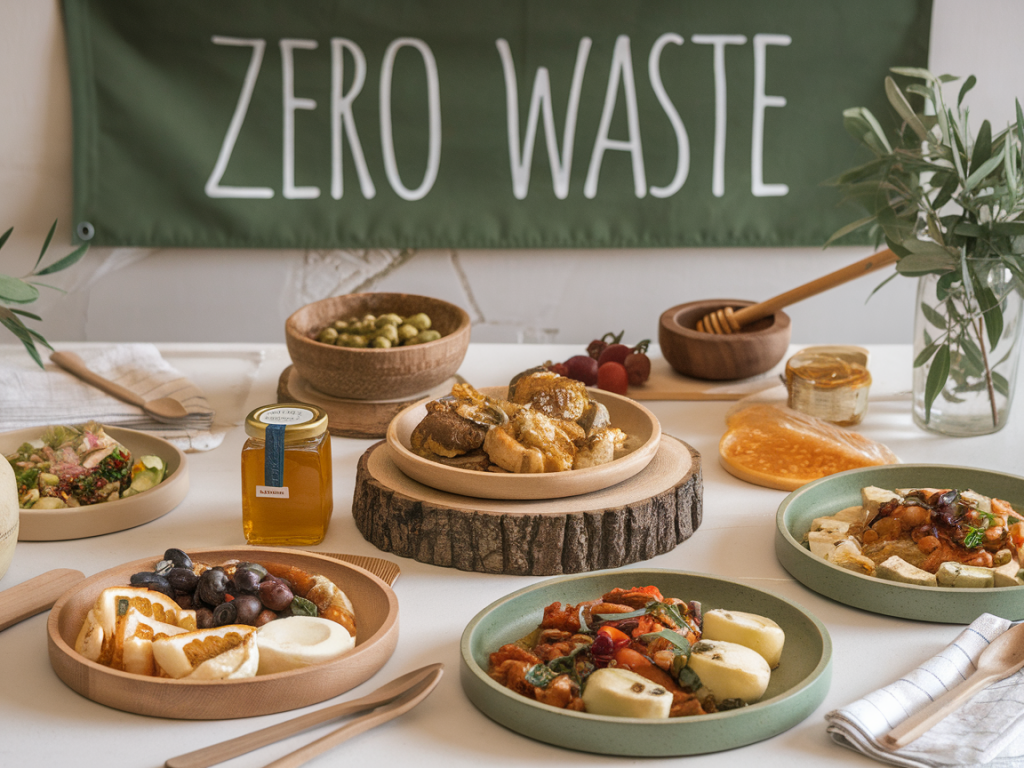
I love hosting small tastings: they’re intimate, low-pressure and a perfect excuse to slow down and savour a few things with friends. Recently I set myself a challenge — could I host an evening tasting that felt special but produced almost no waste, using only items I could pick up at my local supermarket and my existing reusable servingware? The answer was yes, and it was easier (and more fun) than I expected. Here’s a step-by-step guide based on that evening, so you can try a zero-waste tasting of your own without needing special suppliers or unfamiliar ingredients.
Choosing a theme (and keeping it simple)
One trick that keeps waste low is narrowing the scope. I picked a theme that could be explored via small samples: “British cheese & pickles,” paired with small bites and two drinks. You could do “canned fish & toast,” “seasonal veg charcuterie,” or “world chutneys & crackers.” The goal is to use a few versatile supermarket items in multiple ways so nothing gets wasted.
I chose three cheeses (soft, semi-hard, blue), two condiments (a jarred pickle and a supermarket chutney), a single loaf of crusty bread, a bag of mixed nuts, grapes, and a packet of plain crackers. For drinks I bought a bottle of sparkling wine and a non-alcoholic ginger beer. Everything was easily available at my local Co-op and Tesco, and all came in packaging I could either recycle at home or avoid bringing into the house in the first place by buying loose where possible.
Shop thoughtfully: what to look for at the supermarket
- Buy loose where possible — loose grapes, clementines or bagged mixed leaves reduce single-use packaging.
- Choose multi-use items — a crusty loaf becomes toast, crostini and breadcrumbs for later; a jar of chutney can be reused and is a great gift if there’s any left.
- Prefer glass jars and cardboard packaging — both are easy to recycle or keep for reuse (I always keep glass jars for storing leftovers or for homemade sauces).
- Avoid individually wrapped snacks — go for bulk nuts, a single packet of crackers, or a block of cheese instead of pre-sliced trays.
- Small portions — buy smaller packs if you’re two to four people; it’s cheaper and less likely to produce leftovers you’ll throw away.
What I bought (a simple supermarket tasting shopping list)
| Cheeses | Soft cheese (Camembert-style), Cheddar-style block, Stilton or blue |
| Condiments | Jarred pickles (piccalilli), fruit chutney (mango or onion) |
| Carbs & nibbles | Crusty sourdough loaf, plain water crackers, mixed nuts (unsalted), grapes |
| Drinks | Sparkling wine (or cava), craft ginger beer |
| Extras | Olive oil, dried oregano, lemon (for drizzling or refreshing palate) |
Using the servingware you already own
I pulled out a few things from my cupboard: a wooden board, a ceramic pie dish, a small saucer for condiments, a jar of spoons and two wine glasses. The point is to reuse items you already have rather than buying disposable platters. If you don’t own a cheese board, an oven tray lined with a clean tea towel works beautifully.
Small tips that make presentation feel intentional:
- Place the soft cheese whole in a small shallow dish to catch any ooze.
- Slice the semi-hard cheese into batons nobody needs a knife for at the table.
- Put condiments in small jam jars or ramekins — if they’re supermarket jars, simply remove their labels for a cleaner look and reuse the jars later.
- Cluster items (nuts, grapes, crackers) rather than spreading them out — it feels abundant without needing lots of different packages.
Serving — pacing, portions and labelling
For a zero-waste tasting, portion control is part of the sustainability: small samples encourage guests to try everything without excess. I sliced cheeses into modest portions and offered crackers and bread on the side instead of pre-hopping everyone’s plate with multiple items.
I labelled everything with a scrap of kraft paper and a pen (you can tie it with kitchen twine or simply lean the paper against the jar). Labels help guests pair flavours and ask questions — it’s also a great way to start conversation.
- Tasting order: lightest to strongest (sparkling wine before stilton, soft cheese before blue).
- Palate cleansers: plain crackers or water with lemon kept between bites.
- Shareingly plated: place small serving spoons in chutney jars to avoid double-dipping.
Zero-waste touches during the evening
Some small habits during the evening make a big difference:
- Use cloth napkins instead of paper — I keep a small stack for casual dinners; they can be tossed in the laundry afterwards.
- Serve from bowls and boards to reduce single-use plates.
- Ask guests to bring their own glass if they’re travelling — not necessary for a neighborhood drop-by, but handy for larger groups.
- Collect leftovers into glass jars right away — guests can take a jar home as a little gift, or you can refrigerate for another meal.
Leftovers: smart storage and second-meal ideas
Leftovers aren’t failure — they’re an opportunity. After the tasting I had half a loaf, a jar of chutney with a bit left, and some cheese trimmings. Here’s what I did:
- Turned day-old bread into garlic crostini — brushed with olive oil and oven-toasted.
- Made a quick cheese toastie with cheddar and a spoonful of chutney for lunch the next day.
- Placed remaining chutney and pickles in labelled glass jars and kept them in the fridge — they’ll last weeks.
Cleaning, recycling and composting
I washed all servingware by hand in hot soapy water and air-dried on a rack. For packaging:
- Glass jars & bottles — rinsed and added to the recycling bin or kept for reuse.
- Cardboard — flattened and recycled.
- Soft plastic (sleeves around crackers) — checked local store drop-off points; some supermarkets accept plastic film for recycling.
- Food scraps — cheese rinds and small peelings went into my kitchen compost. If you don’t compost at home, check if your council offers food waste collection or look for community compost schemes.
Pairing ideas and small flavour experiments
A tasting is more memorable when you encourage mini-experiments. Try these quick pairings that worked well for me:
- Soft cheese + a dab of sweet chutney + cracker — the sugar softens the cheese’s tang.
- Cheddar + pickles + a roasted nut — salt and crunch bring out the cheddar’s caramel notes.
- Blue cheese + a slice of pear (or grape) + a sip of sparkling — the fruit and bubbles tame the blue’s intensity.
Don’t be afraid to try unlikely combinations. One guest introduced a spoon of honeycomb we found in the supermarket bakery; it was unexpectedly brilliant with the blue.
Invitations, atmosphere and gentle hosting
I kept invitations simple — a message in our group chat saying “small tasting at mine — bring curiosity and a spare glass if you have one.” For atmosphere: low light, a small playlist (think vinyl-adjacent acoustic), and no rigid schedule. Part of the charm is that the evening felt relaxed, not like a formal event. Offer small guidance (what order to taste in, what pairs well) and then step back — guests will bring their own experiments to the table.
If you’d like printable tasting cards, I like to design a small one-page sheet with the items and a space for quick notes — they can be made from one sheet of recycled card per person and reused for future tastings.
Finally, remember that zero-waste hosting is about choices, not perfection. A few mindful swaps — reusable servingware, thoughtful portions, and keeping leftovers useful — will make your tasting feel generous and sustainable. My supermarket-sourced evening was delightful, low-stress and left me with a couple of jars ready for the next dinner. Try it with friends, and consider each small change a mini celebration of good food and less waste.