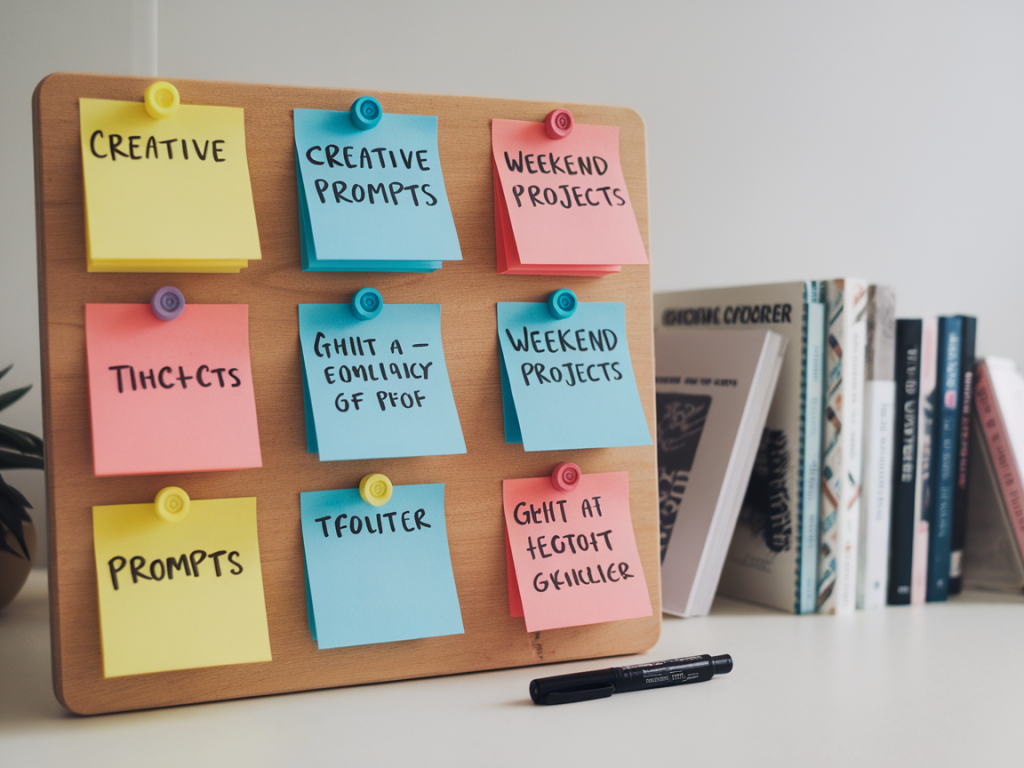
I keep a running collection of creative prompts everywhere — sticky notes, a notes app, sketches in the margins of a notebook, and a tiny pile of scraps on my desk. The problem isn’t finding ideas; it’s turning them into actual weekend projects that don’t fizzle by Saturday afternoon. Over time I developed a quick, five-minute triage method that helps me turn a jumble of prompts into a realistic set of creative weekends. It’s simple, portable, and keeps creativity feeling playful instead of overwhelming.
The idea behind five-minute triage
Triage sounds dramatic, but the concept is gentle: give each prompt a very fast assessment so you can decide whether to do it this weekend, save it for later, or let it go. I aim to spend no more than five minutes per prompt batch, not per idea. That tiny time limit makes me practical — I stop romanticising and start planning.
What you need (and why less is more)
You don’t need a fancy system. Here’s what I usually have on hand:
- A small notebook or a digital list (I alternate between Bullet Journal spreads and Google Keep)
- Three labelled envelopes, folders or notes: Now, Later, Drop
- A timer (the one on your phone is perfect)
- A simple checklist for each prompt: time estimate, materials, location, and joy score
Keeping it minimal helps me avoid decision fatigue. The goal is momentum, not perfection.
Step-by-step: The five-minute triage
Set your timer for five minutes, and follow this sequence for a batch of 10–20 prompts. If you have more, do multiple five-minute sessions.
- Scan quickly: Read each prompt and say the first thing that comes to mind. If an idea immediately feels like "yes," drop it into Now. If it's attractive but needs planning, put it in Later. If you're ambivalent, put it in Drop.
- Estimate time: For items in Now, write a one-line time estimate — 30 minutes, 2 hours, or "half a day". Be realistic: weekends are for living, not marathon productivity.
- List one key material: For each Now item, note the single most important material or tool you need. If it’s unavailable or requires a day of shopping, move it to Later.
- Choose a location: Will you do this at home, at a café, or outdoors? Location affects feasibility — I rarely schedule a task that requires a workshop if I don’t have one on the weekend.
- Give it a joy score: On a 1–5 scale, how excited are you about doing this? Keep only the items rated 3–5 in Now.
A simple table to visualise the triage
| Prompt | Time | Key material | Location | Joy (1–5) | Action |
|---|---|---|---|---|---|
| Paint a quick kitchen still life | 2 hours | Watercolour set | Kitchen table | 4 | Now |
| Try a new bread recipe | Half day | Strong bread flour | Home kitchen | 5 | Now |
| Design a zine | 4+ hours | Printer + paper | Studio | 3 | Later |
Turning Now into a weekend plan
Once you’ve filled the Now pile, schedule. I block time in my calendar like I would any other commitment — even if it’s just a two-hour block on Sunday morning titled "Paint: still life". Three rules I follow:
- Limit to two substantive projects per weekend. Anything more feels rushed.
- Build one cushion period for life stuff (laundry, groceries). It’s amazing how quickly a project unravels if you forget the basics.
- Keep one micro-project (<30 minutes) as a creative warm-up. It reduces the friction to start.
Materials, shopping, and prep in a ten-minute check
After scheduling, spend ten minutes prepping. This is where many prompts fail: the materials are missing or set-up takes longer than the project. My ten-minute check asks:
- Do I have the key material? If not, can I substitute? (Example: use plain flour instead of bread flour for a quick loaf.)
- Do I need a space prepped (covering surface, clearing table)?
- Do I want music, a podcast, or a timer? Setting the mood makes the project feel special.
What to do with Later and Drop
Later is not a graveyard. It’s a curated waiting room. I review that list monthly and move items forward when the stars align — a free weekend, a sale on supplies, or renewed enthusiasm. Add a note for the trigger that would move it forward (example: "move to Now when I have a 3-hour morning free").
Drop frees up mental space. If an idea is in Drop, wait a month and see if you miss it. If you do, reincorporate it; if not, let it go. I find many ideas feel urgent in the moment but evaporate with time — and that’s okay.
Small rituals that help ideas become projects
- Start Sunday evening with a five-minute glance at the weekend plan. It keeps commitments friendly rather than stressful.
- Create a "starter kit" box: tape, glue, sketchbook, a pen, small paints. For me, having a box reduces setup time and excuses.
- Use simple prompts that have immediate payoffs, like "colour study in 30 minutes" or "bake one-bowl cake".
Real-life example: how I turned a note into a day
Last month I had a scribble: "map of favourite walks — tiny watercolour + notes." It was in the pile for months. During a five-minute triage session it went to Now with a 3-hour estimate (walk + paint). Prep took ten minutes: pack watercolours, a small paper pad, and a sandwich. I blocked a Saturday morning, chose a nearby route, and set one rule — no pressure for perfection, just one small square of watercolour at a time. The result: two painted squares, a hand-lettered map, and a short blog post. The whole thing felt manageable because I’d broken it into tiny, scheduled steps.
If you keep collecting prompts (and I hope you do), this five-minute triage will save them from becoming forgotten good intentions. It turns inspiration into a plan, and plans into weekends that feel creative, doable, and somehow celebratory.