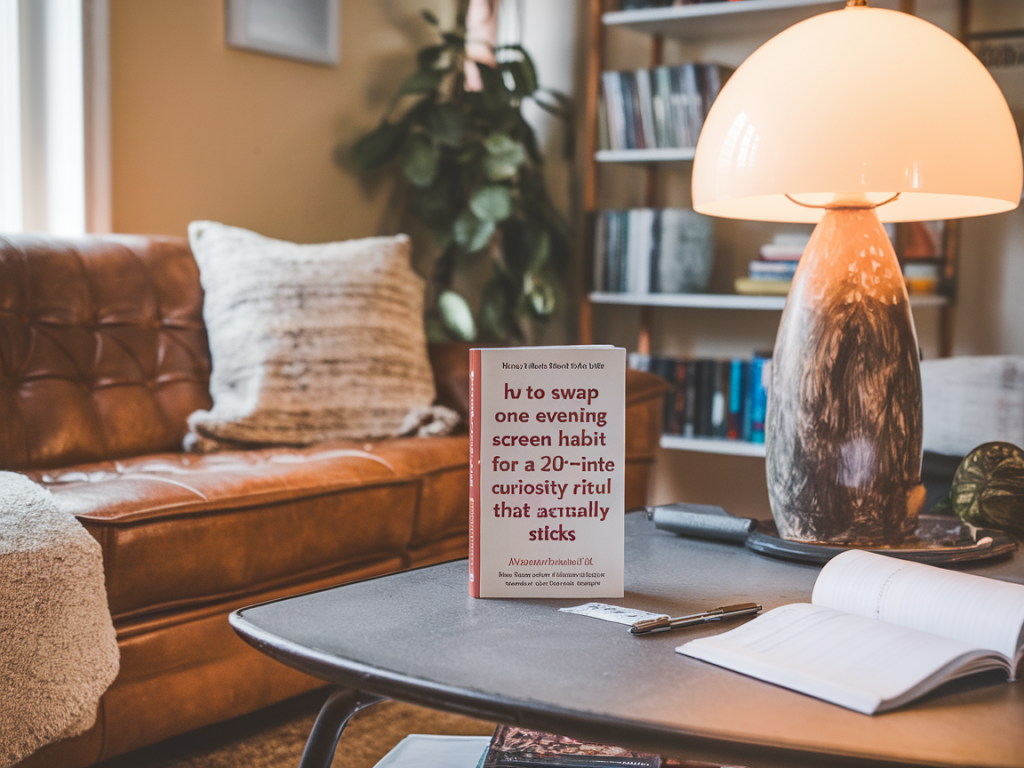
I used to end most evenings with the same small ritual: half an hour of doom-scroll, a quick dive into social feeds, then a guilt-sifted flick through headlines before bed. It felt relaxing in the moment, but I often woke up foggy, dissatisfied, and—worse—curious about nothing. A few months ago I decided to swap that habit for something deliberately curious and just 20 minutes long. The result wasn’t dramatic in a single night, but it stuck. It made my evenings calmer, my mornings brighter, and my sense of satisfaction about the day quietly richer.
Why a 20-minute curiosity ritual?
There are three reasons I recommend keeping it to around 20 minutes:
Feasible: It’s short enough that you’re not asking for a major commitment.Focused: Long sessions can lead to decision fatigue; 20 minutes creates a clear boundary.Rewarding: It’s long enough to explore something properly and to feel a sense of completion.A curiosity ritual is not a productivity hack disguised as leisure. It’s a gentle, intentional time to notice, learn, play or imagine. The goal is to replace passive screen time with an active, low-pressure practice that stimulates interest more than anxiety.
How I set the scene
Environment matters. I don’t attempt the ritual where I usually doom-scroll—my phone lives in the living room, not by my bed. Here’s how I prepare the space:
Remove the temptation: Put the phone out of arm’s reach or in airplane mode. If you use your phone as a timer, set a 20-minute timer and then flip the screen down.Create a small ritual cue: I light a candle (or a scented diffuser) and make a cup of tea. The cue signals to my brain that this time is different from the chaotic scroll time.Keep tools ready: I keep a dedicated notebook—simple Moleskine or a cheap lined journal—and a favourite pen on the side table.Picking the right curiosity ritual
Not every curiosity exercise will stick. The ones that do are:
Simple: They don’t require complex set-up or a lot of materials.Intrinsic: You do them because they’re interesting, not because they promise quick external gains.Flexible: They adapt to mood and energy levels.Here are categories and specific examples I rotate through—pick one per evening rather than trying to do several.
| Category | Example Ritual | Why it works |
|---|
| Learn | Read a short essay from The Atlantic or a chapter from a travel memoir on Kindle | Feeds knowledge without the pressure of finishing a book |
| Create | Do a 20-minute sketch or freewriting prompt | Channelled creativity that’s quick to start |
| Explore | Open a map or Wikipedia page and trace a place you’ve never been | Turns curiosity into a small, contained investigation |
| Practice | Learn 5 new words in a language app like Duolingo or write a short paragraph using them | Micro-practice that builds over time |
| Reflect | Journal three small things I noticed today and a question I want to explore | Builds mindful awareness and future curiosity |
Sample 20-minute ritual blueprint
Here’s the template I use so the ritual doesn’t become vague or skip nights:
Minute 0–2: Set the cue (tea, candle), put phone away, set a 20-minute timer.Minute 2–4: Decide on the micro-activity (pre-chosen the night before or choose quickly now).Minute 4–18: Engage fully—read, write, sketch, research. No multitasking.Minute 18–20: Jot one observation or next question; tidy your space and turn lights down.Prompt ideas to get you started
If you’re wondering what to do for 20 minutes, try these prompts. I keep a rotating list in my notebook and pick one when I sit down:
Write a 300-word scene that starts with “I didn’t expect to find…”Sketch a plant or an item on your desk for 20 continuous minutes—no erasing.Read one long-form article (from Longreads, The New Yorker, or a favourite blog) and write three sentences that surprised you.Open a country on Wikipedia and read about one cultural tradition; write a one-sentence reflection on how it compares to something in your life.Learn five words in a language you like and use each in a sentence you’d actually say.What helped me actually stick to it
Swap-focused habits need scaffolding. Here are the actual small moves that made this stick for me:
Start small: I promised myself a five-night trial, not forever. That lowered the pressure to be perfect.Habit stack: I attached the ritual to an existing bedtime habit—making herbal tea. It’s easier to add to an established chain than to build a brand new routine.Visible cues: The notebook on the side table served as a visual reminder. If I saw it, I’d more likely sit down.Accountability: I told one friend what I was trying. We swapped weekly notes—nothing intense, just a quick “did you do it this week?” text.Make it pleasurable: If it felt like punishment, I abandoned it. So I kept elements that felt like treats: a nice pen, a mug I love, a candle.Troubleshooting common problems
If it’s not sticking, here are fixes for problems I ran into:
I feel tired: Switch to a passive curious ritual—listen to a 20-minute episode of a thoughtful podcast (On Being, Desert Island Discs) while lying down.I find myself thinking about chores: Write a two-minute “brain dump” list before starting; it frees your mind to focus on curiosity.I revert to scrolling: Make the first two minutes a small win—read a single paragraph or sketch one line. Small success reduces the urge to bail.I get perfectionist: Remind yourself the point is exploration, not output. Messy notes are evidence of curiosity, not failure.How to know it’s working
Outcomes are subtle. Here are signs the ritual is making a difference:
You notice mornings feel lighter, with more clarity or an idea lingering from last night.You remember small details from the thing you explored, not just headlines.You find yourself eager to pick a curiosity prompt rather than reaching for your phone.You accumulate a visible trail of work—a growing notebook, sketches, or a list of things you want to explore further.Swapping one evening screen habit for a tiny curiosity ritual doesn’t have to be dramatic. It’s a patient, friendly reallocation of twenty minutes that invites interest back into ordinary time. If you give it a five-night trial and adjust by the tips above, it’s surprising how often that small practice becomes something you look forward to rather than something you force yourself to do. If you try it, I’d love to hear which prompt stuck with you—drop a note in the comments or reach out through the contact page at Blogslife Co.