I’ve learned the hard way that a pretty backpack isn’t always a good travel companion. On a windy Greek island, my lightweight daypack flapped like a sail. On a muddy hike in Scotland, a canvas bag soaked through and the strap started to fray. Choosing a travel backpack that truly fits your style and itinerary means balancing practical details with the look and feel you want to carry. Below are the questions I ask myself now — and the simple, specific choices I make — before buying a bag for a trip.
Start with your itinerary, not just the aesthetic
The first and most useful filter is: where am I going and how will I travel? Week-long city trips, multi-week backpacking, weekend escapes, and business trips all demand different features. For example, for a short city break I prioritise a clean, compact bag that fits under the plane seat. For a month-long trip that involves trains, buses and a few hostels, I want something durable with comfortable straps and good organisation.
Ask yourself:
- How long is the trip? A weekend requires less volume than six weeks.
- What transport will I use? If I’m flying budget airlines, carry-on friendly dimensions matter. If I’m hopping buses, I need durability and easy access.
- What activities are planned? Hiking requires sternum and hip belts; city touring benefits from anti-theft pockets and a laptop sleeve.
- What’s the climate? Rainy destinations call for waterproof fabric or a rain cover; hot climates make ventilated back panels valuable.
Choose the right size: a practical table
Backpack capacity is measured in litres. I used to think more was better until I learned to pack intentionally. Here’s a simple guideline I use:
| Litres | Trip length | Typical use |
|---|---|---|
| 20–25 L | Day trips / weekend | City essentials, small camera, water bottle |
| 28–35 L | Short trips (3–7 days) | Carry-on friendly, basic clothing + laptop |
| 40–50 L | 1–2 week trips / light packers | Clothes, toiletries, shoes; some internal organisation |
| 50–70 L | Longer trips / multi-climate | Travel + activity gear; often used for backpacking |
| 70+ L | Specialised travel or expedition | Mountaineering, large gear loads |
Think about carry-on rules and daypack needs
I always check airline size limits before I commit. A bag that says “carry-on” on the product page can still be too big for narrow-budget airlines. If staying nimble is part of your travel style, choose something with dimensions that fit most airlines (about 55 x 40 x 20 cm / 22 x 14 x 9 in is a common target).
I also consider whether I want a separate daypack or a backpack with a detachable daypack. For me, a small packing cube or a foldable daypack inside the main bag has saved space and given flexibility. For example, Cotopaxi and Peak Design make convertible solutions that are handy for both city wandering and light hikes.
Comfort features that actually matter
When I tried a gorgeous, minimalist canvas backpack for a two-week trip, I regretted it within hours — the lack of a hip belt and poor padding made walking between stations painful. Now, I look for these comfort details:
- Padded shoulder straps with a shaped fit to your shoulders.
- Hip belt for heavier loads — it transfers weight from shoulders to hips.
- Sternum strap to stabilise the pack on your chest.
- Ventilated back panel if you’ll be in hot or humid climates.
- Adjustable torso length if you plan to share the pack or need a custom fit.
Material, weatherproofing and durability
Pick a fabric that matches your travel life. If you’re mostly urban, lightweight and water-resistant nylon often works and keeps things sleek. For outdoor adventures, look for ripstop nylon or Cordura. I always test zips and buckles when buying: solid hardware lasts longer, and YKK zippers have saved me on more than one trip.
If you expect regular rain, either choose a pack with a built-in rain cover or buy a separate cover. Brands like Osprey include rain covers on several models; for a sleeker look, Peak Design’s weatherproofed bags use DWR coatings that resist drizzle without adding bulk.
Organisation: pockets, access and security
I’m a fan of accessible organisation. Side pockets for water bottles, a quick-access phone pocket, and a laptop sleeve for work trips are essentials for me. Think about whether you prefer a top-loading pack (great for spontaneity), or a clamshell/front-loading bag (ideal for suitcase-style packing).
If you plan to walk through crowded places or use overnight buses, anti-theft features are useful: lockable zippers, hidden compartments, and slash-resistant straps. Pacsafe and some reworked travel models from Tortuga incorporate these features without looking too “travel-gear-y.”
Style: lean into your personal aesthetic
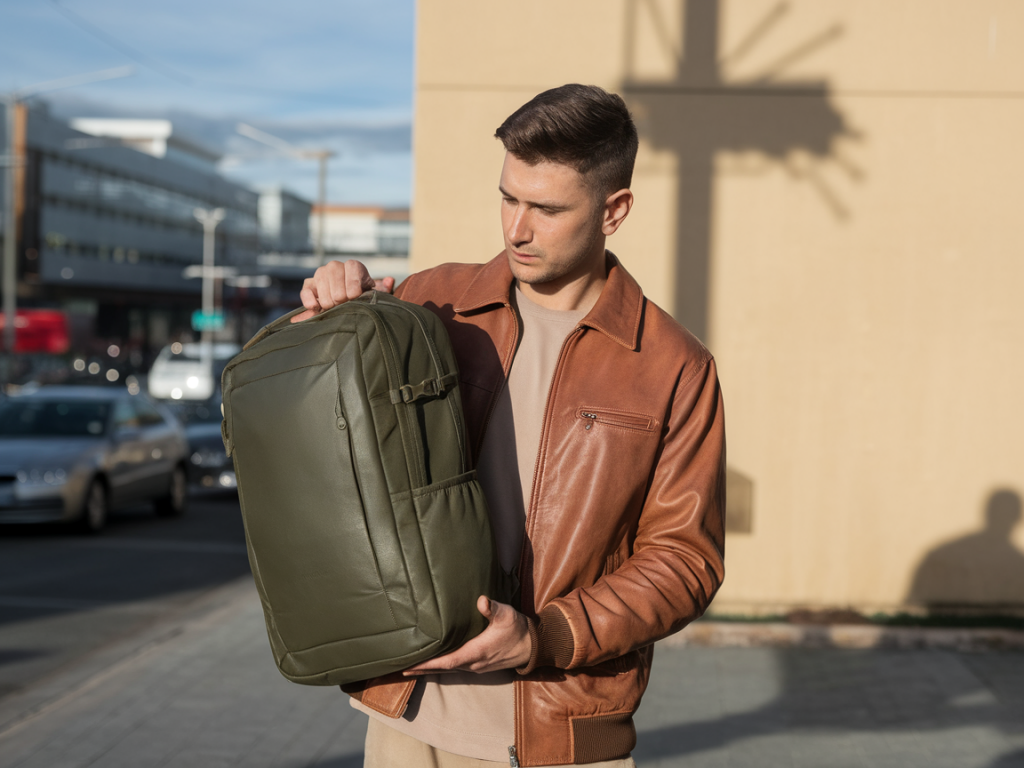
Style matters — you’re carrying this every day. Do you prefer a classic leather-look, a technical outdoorsy vibe, or a clean modern design? The good news is there are options that blend both form and function:
- Minimal urban — Peak Design Everyday, Bellroy Travel Collection: sleek, organised, photo-friendly.
- Classic rugged — Patagonia, Filson, Fjällräven: durable and timeless.
- Backpacker-ready — Osprey, Deuter, Gregory: excellent support and capacity options.
- Colourful and playful — Cotopaxi: fun, ethically-minded, and practical.
When I choose a colour, practicality wins: I prefer darker hues for longevity but add a colourful pack cover or a small scarf tied to a strap to personalise it.
Try before you buy (and what to test)
If possible, try packs with weight in them. I fill the bag with books or weighted items at the store and walk around. Key things I test:
- How the hip belt sits on my hips and whether the weight shifts when I move.
- If the shoulder straps rub under my arms when I’m walking briskly.
- Whether the zips are smooth and pockets are easy to reach while wearing the bag.
- How the bag looks from behind — a tall, narrow pack might look and feel different to you than a broad one.
Packing strategy and accessories that pair well
Once you’ve chosen the bag, a few accessories will make it sing: packing cubes to keep clothes compact, a toiletry roll, and a slim laundry bag. I always carry a small waterproof pouch for passports and valuables and a lightweight strap or luggage lock if I’m using shared storage.
One of my favourite pairing moves is to choose a bag with a clean exterior and then customise the interior with organisers. That way, I keep the look I love but avoid daily rummaging.
Budget and sustainability
Your budget will narrow options but consider long-term value: a well-constructed pack from Osprey or Patagonia can last many trips and often has lifetime repair or guarantee programmes. If sustainability is important to you, look for recycled materials and brands transparent about their supply chains.
My last bag was a second-hand Osprey that I fixed up with new buckles — it looked and felt almost new and came with a fraction of the cost and environmental impact.
Choosing a travel backpack is a personal balance of comfort, capacity, and style. When the bag fits your body and your plans, it fades into the background and lets you enjoy the trip — which is exactly what I want from the piece of luggage I carry every day.